Wolves in Sheep’s Clothing
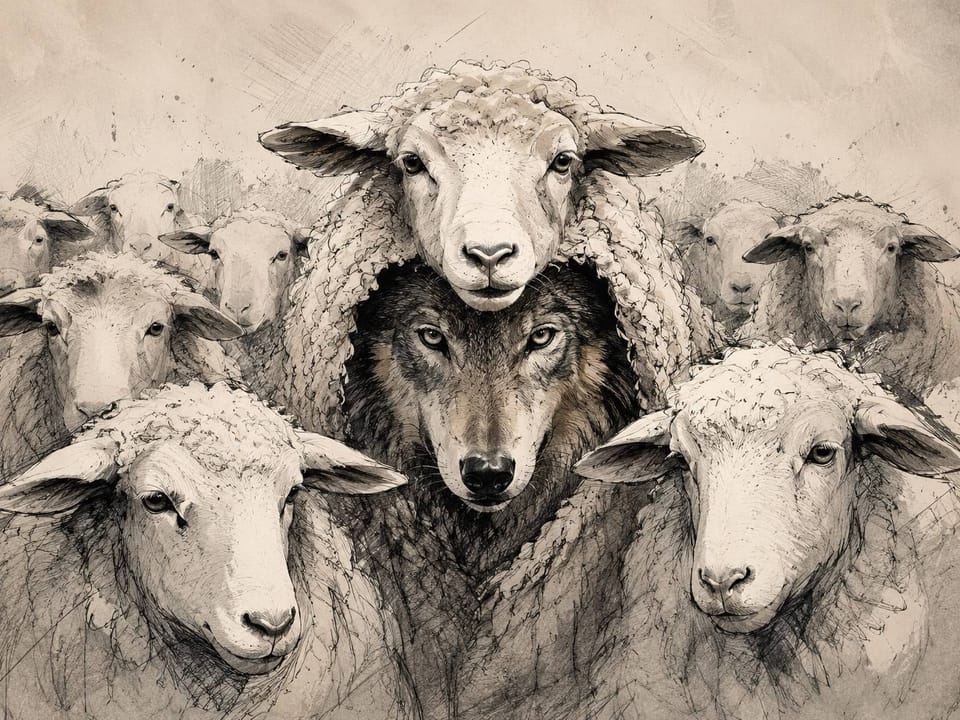
Matthew 7:15 KJV says:
“Beware of false prophets, which come to you in sheep's clothing, but inwardly they are ravening wolves.”
Jesus did not only warn about false prophets who look obviously dangerous. He warned about false prophets who come in sheep’s clothing.
💡 That means deception often appears harmless, gentle, spiritual, loving, and safe on the outside. The danger is not always easy to recognize at first. A wolf in sheep’s clothing does not appear as a wolf immediately. It appears as something familiar, acceptable, and trustworthy.
This is why believers must not judge teaching by outward appearance alone.
A message may sound kind and still be false.
A teacher may appear humble and still lead people astray.
A ministry may look successful and still produce bad fruit.
A spiritual voice may speak softly and still contradict Scripture.
Jesus said, “Beware.”
What Does “Sheep’s Clothing” Mean?
“Sheep’s clothing” describes an outward appearance that looks safe and spiritual.
False teachers and false prophets may appear sincere, compassionate, intelligent, gifted, or deeply religious. They may use Bible verses, Christian language, emotional stories, and spiritual promises.
They may speak about:
- Love
- Grace
- Faith
- Blessing
- Unity
- Purpose
- Healing
- Freedom
- Spiritual growth
- God’s goodness
These words may be biblical when used correctly. But false teaching often keeps biblical words while changing their meaning.
⚠️ A wolf in sheep’s clothing is dangerous because the outside appears acceptable while the inward nature is destructive.
The Danger Is Hidden Beneath Appearance
Jesus said false prophets come in sheep’s clothing, but inwardly they are ravening wolves.
The word “inwardly” matters.
The danger is not always visible on the surface. The outward presentation may be polished, emotional, popular, and persuasive. But the inward result is destruction.
False teaching may slowly:
- Weaken trust in Scripture
- Redefine Jesus Christ
- Remove repentance
- Excuse sin
- Twist grace
- Promote pride
- Create dependence on a personality
- Replace holiness with compromise
- Replace the gospel with self-centered messages
- Lead people away from Christ
💡 This is why believers must look beyond appearance.
👉 A sheep-like appearance does not prove a sheep-like heart.
Jesus Said We Would Know Them by Their Fruit
After warning about wolves in sheep’s clothing, Jesus explained how they can be recognized.
Matthew 7:16-20 KJV says:
“Ye shall know them by their fruits. Do men gather grapes of thorns, or figs of thistles?
Even so every good tree bringeth forth good fruit; but a corrupt tree bringeth forth evil fruit.
A good tree cannot bring forth evil fruit, neither can a corrupt tree bring forth good fruit.
Every tree that bringeth not forth good fruit is hewn down, and cast into the fire.
Wherefore by their fruits ye shall know them.”
Jesus did not say believers would know them by popularity, confidence, charisma, appearance, or success.
He said, “By their fruits ye shall know them.”
What Kind of Fruit Should Be Examined?
Fruit includes more than visible results.
A large crowd is not automatically good fruit. Financial success is not automatically good fruit. Emotional excitement is not automatically good fruit. A growing platform is not automatically good fruit.
Biblical fruit should include:
- Sound doctrine
- Faithfulness to Scripture
- Repentance
- Holiness
- Humility
- Integrity
- Love for truth
- Obedience to Christ
- Godly character
- A Christ-centered gospel
Bad fruit may include:
- Twisting Scripture
- Excusing sin
- Manipulating people
- Constant focus on money
- Pride and self-exaltation
- Lack of accountability
- False prophecies
- Spiritual control
- Another Jesus
- Another gospel
The fruit must be tested by Scripture, not by appearance.
Wolves Often Use Bible Language
One reason wolves in sheep’s clothing deceive many people is that they often use Bible language.
They may quote verses, tell biblical stories, and speak about God. But using Scripture is not the same as teaching Scripture faithfully.
Satan quoted Scripture when tempting Jesus, but he used it wrongly.
A false teacher may use the Bible to support:
- Personal ambition
- Financial manipulation
- False promises
- Sinful compromise
- Private revelation
- Spiritual control
- Another gospel
Believers must ask more than, “Was a Bible verse used?”
They must ask:
- Was the verse used in context?
- Does this teaching agree with the whole Bible?
- Does it exalt Jesus Christ?
- Does it preserve the gospel?
- Does it lead to repentance and holiness?
- Does it make Scripture the final authority?
A Bible verse twisted out of context can become a tool of deception.
Wolves Often Say What People Want to Hear
False teachers often gain influence by appealing to desire.
2 Timothy 4:3-4 KJV says:
“For the time will come when they will not endure sound doctrine; but after their own lusts shall they heap to themselves teachers, having itching ears;

And they shall turn away their ears from the truth, and shall be turned unto fables.”
This warning shows that false teaching often succeeds because people want messages that please them.
A wolf in sheep’s clothing may offer:
- Blessing without obedience
- Grace without repentance
- Faith without holiness
- Love without truth
- Peace without correction
- Salvation without surrender
- Power without humility
- Success without the cross
👉 These messages are attractive because they comfort the flesh.
But sound doctrine does not always tell people what they want to hear. Sometimes it warns, corrects, convicts, and calls people back to God.
Wolves May Exploit People
The Bible warns that false teachers may use people for gain.
2 Peter 2:3 KJV says:
“And through covetousness shall they with feigned words make merchandise of you…”

This is a serious warning. False teachers may treat people as merchandise. They may use spiritual language to gain money, loyalty, influence, or control.
Warning signs include:
- Constant pressure to give money
- Promises of financial return for donations
- Fear-based manipulation
- Special access sold as spiritual privilege
- Lack of financial transparency
- Loyalty demanded to a leader
- Questions treated as rebellion
- People used to build a platform
Faithful ministry serves people.
False ministry uses people.
Wolves May Appear Loving While Avoiding Truth
Some deception appears loving because it avoids hard truths.
A message may sound kind because it never speaks about sin, repentance, judgment, holiness, or the cross. But refusing to warn people is not biblical love.
1 Corinthians 13:6 KJV says that charity:
“Rejoiceth not in iniquity, but rejoiceth in the truth;”

True love rejoices in truth.
A wolf in sheep’s clothing may redefine love as approval. It may suggest that correction is hateful, discernment is judgmental, and doctrine is divisive.
But biblical love does not lead people away from God. True love tells the truth with humility.
Wolves Draw People After Themselves
A major sign of danger is when a teacher draws people to themselves instead of to Jesus Christ.
Acts 20:29-30 KJV says:
“For I know this, that after my departing shall grievous wolves enter in among you, not sparing the flock.

Also of your own selves shall men arise, speaking perverse things, to draw away disciples after them.”

This passage directly connects wolves with drawing disciples after themselves.
A dangerous leader may create dependence by making people feel they cannot understand God, Scripture, or spiritual truth without that leader.
Watch for patterns such as:
- Excessive focus on the teacher
- Discouraging personal Bible study
- Demanding unquestioned loyalty
- Treating disagreement as rebellion
- Claiming special revelation above correction
- Making followers dependent on the ministry
- Presenting the leader as spiritually untouchable
A faithful teacher points people to Christ.
A wolf draws people after himself.
Not Every Mistake Means Someone Is a Wolf
Discernment must be careful.
A sincere believer may misunderstand a passage, make a mistake, or need correction. That does not automatically make someone a wolf.
The warning concerns a pattern of deception, corrupt fruit, false doctrine, manipulation, or spiritual harm.
Believers should distinguish between:
- A sincere mistake and deliberate deception
- An immature teacher and a destructive teacher
- A secondary disagreement and a false gospel
- A person who receives correction and a person who refuses truth
- A flawed servant and a wolf in sheep’s clothing
The label should not be used carelessly.
But the warning of Jesus should not be ignored either.
How Believers Can Guard Against Wolves
Believers can guard themselves by staying rooted in Scripture.
Ask:
- Does this teaching agree with the Bible?
- Is Jesus Christ central?
- Is the gospel preserved?
- Is repentance preached?
- Is holiness encouraged?
- Is Scripture used in context?
- Is the teacher accountable?
- Is there humility?
- Is there manipulation?
- Is money being used wrongly?
- Are people pointed to Christ or to a personality?
- What fruit is being produced over time?
The safest believer is not the one who follows every spiritual voice.
The safest believer is the one who tests every voice by the Word of God.
Conclusion: Beware of Spiritual Deception That Looks Safe
Matthew 7:15 KJV says:
“Beware of false prophets, which come to you in sheep's clothing, but inwardly they are ravening wolves.”
Jesus warned that false prophets may appear harmless while being spiritually dangerous.
They may use Christian language.
They may quote Scripture.
They may sound loving.
They may attract followers.
They may promise blessing.
They may appear successful.
They may look like sheep.
But the fruit reveals the truth.
Do not judge by appearance alone.
Do not follow a message because it is popular.
Do not trust a teacher because they sound spiritual.
Do not accept Bible verses used out of context.
Do not ignore bad fruit.
Do not follow anyone who draws attention away from Jesus Christ.
Search the Scriptures.
Test the fruit.
Hold fast to sound doctrine.
And above all, stay close to the true Shepherd, Jesus Christ. 🙏